Commercial Property Irrigation Services for Healthy, Attractive Landscapes
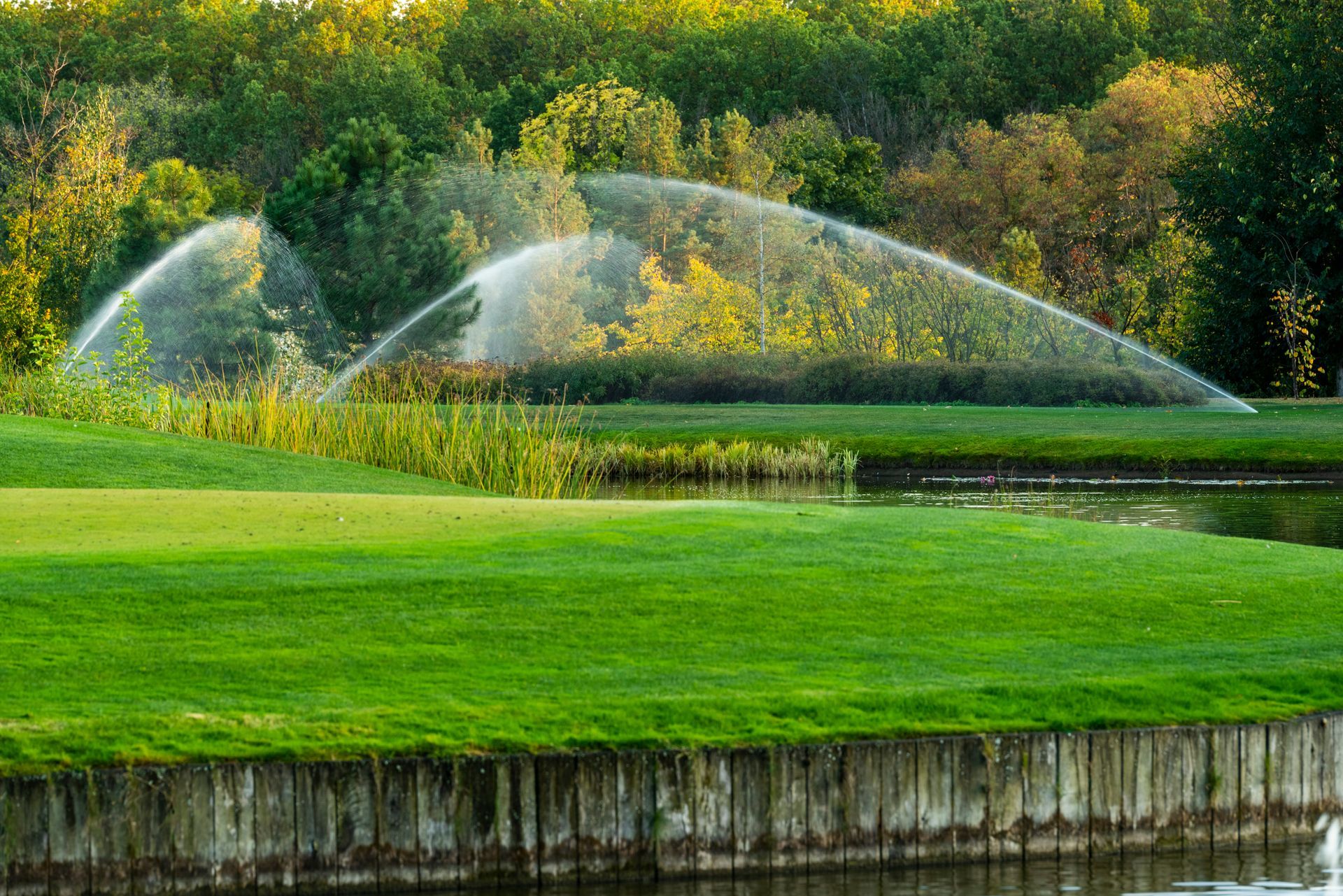
Commercial property irrigation services manage how water reaches turf, trees, shrubs, and planting beds across business and institutional landscapes. Proper coverage supports plant health, creates a more consistent appearance, controls unnecessary water use, and protects the property’s long-term landscape investment.
Property managers, facility teams, commercial owners, schools, municipalities and multi-site operators depend on irrigation systems to perform under changing weather and property conditions. A system must do more than turn on at a scheduled time. It must deliver the right amount of water to each part of the landscape without creating dry areas, flooding, runoff, or repeated overspray.
What Is Commercial Property Irrigation?
Commercial property irrigation is the design, operation, inspection, adjustment, repair, and seasonal care of watering systems used across business and institutional landscapes.
A complete irrigation system connects several components:
- The water supply provides the available flow and pressure.
- The controller determines when irrigation begins and how long each area runs.
- Valves open and close the water supply to individual sections.
- Irrigation zones divide the property according to landscape and operating needs.
- Sprinkler heads and nozzles distribute water across turf and larger planted areas.
- Drip lines apply water more directly around shrubs, trees, and planting beds.
- Rain, weather, and soil-moisture sensors help prevent unnecessary watering or modify the schedule.
- The soil, turf, trees, shrubs, and flowers determine how much water each zone actually needs.
These parts must function as one system. A correctly programmed controller cannot overcome a broken pipe, poor head placement, incompatible nozzles, or zones that combine plants with very different needs. Likewise, functioning sprinkler heads will not produce good results when the schedule ignores rainfall, seasonal temperatures, slope, shade, or soil absorption.
EPA guidance recommends grouping plants with similar requirements into irrigation zones and accounting for plant type, sprinkler type, and sun or shade exposure when programming those zones.
Which Commercial Properties Need Irrigation Services?
Commercial properties with maintained turf, trees, shrubs, planting beds, athletic areas, or automatic watering systems may need professional irrigation services.
Office parks use irrigation to maintain building entrances, tenant-facing lawns, common areas, and roadside frontage.
Retail centers often need separate water management for parking-lot islands, narrow planting beds, pedestrian areas, monument signs, and highly visible entrances.
Industrial facilities may have large turf areas, perimeter plantings, restricted work areas, and landscape zones separated by pavement or security controls.
Apartment and condominium communities depend on irrigation across shared lawns, entrances, clubhouses, walking areas, recreation spaces, and multiple buildings.
Schools and universities may have ornamental landscapes, courtyards, athletic fields, play areas, and campus zones with different use schedules.
Municipal properties include public buildings, parks, streetscapes, athletic grounds, libraries, and other community-facing landscapes.
Healthcare facilities require careful coordination around entrances, patient and visitor areas, courtyards, active parking lots, and continuously occupied buildings.
Corporate campuses often need consistent standards across multiple buildings, entrances, common spaces, and high-visibility frontage.
Athletic properties require irrigation plans that account for field use, traffic, turf recovery, mowing schedules, soil compaction, and uniform playing conditions.
Not every commercial site needs the same type of system. Plant material, soil, drainage, rainfall, property use, establishment needs, and appearance standards determine the appropriate irrigation approach.
How Does Irrigation Improve Commercial Property Appearance?
Irrigation improves commercial property appearance by delivering the appropriate amount of water to each landscape area at the proper time.
A strong irrigation program does not simply apply more water. It improves how consistently water reaches the intended soil and root zones while limiting missed areas, overspray, and saturation.
Maintains Consistent Turf Color
Irrigation maintains more consistent turf color by reducing moisture stress caused by inadequate or uneven coverage.
Brown patches and thin areas can develop when heads are blocked, damaged, incorrectly spaced, or operating under insufficient pressure. Turf can also decline where compacted soil, traffic, mowing stress, disease, or poor fertility limits growth, so an inspection should determine whether water distribution is the actual cause before schedules are increased.
Uniform irrigation supports a more consistent result across entrances, open lawns, road frontage, and other visible areas. It also helps prevent the common mistake of overwatering an entire zone to compensate for one dry section.
Supports Healthy Trees and Shrubs
Irrigation supports healthy trees and shrubs by delivering water to the active root zone according to plant age, species, canopy size, soil conditions, and seasonal demand.
Newly installed plants generally need closer monitoring while roots establish. Established trees and shrubs may require deeper, less frequent watering than shallow-rooted turf or annual flowers. Applying one schedule to all three plant groups can leave some plants dry while keeping others excessively wet.
Connecticut DEEP advises watering trees and shrubs with deep root systems for longer periods and less frequently than shallow-rooted plants.
Protects Planting Beds
Irrigation protects planting beds by helping annual flowers, perennials, shrubs, and mixed plantings receive water without repeatedly soaking adjacent pavement or turf.
Plant density, mulch depth, root competition, sun exposure, and the combination of plant species affect how quickly a bed dries. Drip irrigation may be appropriate where water needs to be applied slowly near the root zone, particularly in shrub beds and narrow planting areas.
UConn Extension recommends grouping plants with similar watering and light requirements and using high-efficiency methods such as drip irrigation where irrigation is necessary.
Reduces Dry Spots and Overwatered Areas
Irrigation reduces dry spots and overwatered areas when zones, nozzles, head placement, pressure, and run times work together.
A dry spot does not always mean the entire zone needs a longer run time. One tilted head, clogged nozzle, damaged line, blocked spray pattern, or pressure problem may prevent water from reaching a limited area. Increasing the schedule without repairing the underlying problem can flood the rest of the zone.
The same principle applies to wet areas. A leaking valve, broken pipe, low point, drainage limitation, or incompatible sprinkler can create pooling even when the controller appears to be programmed correctly.
Supports a Consistent Property Standard
Irrigation supports a consistent property standard by helping multiple buildings and landscape areas receive care according to the same management objectives.
Entrances, street frontage, common areas, courtyards, building perimeters, and tenant-facing landscapes may have different water requirements, but they should contribute to one coordinated property appearance. This is particularly important across corporate campuses, associations, municipalities, and multi-site portfolios where inconsistent watering becomes visible from one zone or building to the next.
Which Commercial Irrigation Services Keep Systems Working?
A complete commercial irrigation program combines system planning, installation, inspections, repairs, seasonal service, schedule management, and efficiency upgrades.
Irrigation System Design and Installation
Irrigation system design and installation establish how water will move through the property and reach each landscape area.
Planning should consider:
- Property layout and landscape boundaries
- Available water source
- Flow and pressure
- Number and location of irrigation zones
- Turf, tree, shrub, and flower requirements
- Slopes, shade, wind, and reflected heat
- Sprinkler-head and nozzle placement
- Appropriate use of drip irrigation
- Controller capacity and communication features
- Sensors and flow-monitoring equipment
- Access for future testing and repairs
- Planned landscape growth or property changes
The design must separate areas that cannot be effectively watered into a single schedule. Turf should not normally automatically share a zone with established shrubs, and a sunny slope may not perform correctly on the same schedule as a shaded planting bed.
EAQ collaborates with our partner, North East Irrigation, to provide irrigation services as part of our commercial landscape construction projects.
Irrigation System Inspections
Irrigation system inspections evaluate the complete system rather than replacing only the first visibly damaged component.
EAQ’s inspection reports can include:
- Controller programming
- Zone-by-zone operation
- Valve performance
- Sprinkler heads and nozzles
- Drip lines and emitters
- Water pressure
- Head alignment and spacing
- Distribution and coverage
- Rain and soil-moisture sensors
- Flow-monitoring functions
- Leaks and underground losses
- Runoff and pavement overspray
- Seasonal schedules
- Written findings and recommended corrections
- Site photographs
- Flow testing
- Catch-can or distribution testing
- Water-budget calculations where applicable
A full inspection connects system performance with visible landscape conditions. Brown turf, declining shrubs, saturated soil, pavement runoff, and excessive water use should be evaluated alongside the mechanical system.
The Irrigation Association’s audit guidance treats site conditions, field measurements, system performance, distribution, scheduling, and recommended improvements as connected parts of an irrigation evaluation.
Irrigation System Repairs
Irrigation system repairs restore controlled water delivery when a component is damaged, obstructed, leaking, or failing to communicate.
Common repairs include:
- Broken or tilted sprinkler heads
- Damaged underground pipes
- Faulty or stuck valves
- Wiring and electrical faults
- Controller problems
- Clogged or incompatible nozzles
- Leaking connections
- Damaged drip lines
- Failed sensors
- Pressure-related component problems
Repair work should address the cause of the failure, not only the visible symptom. For example, repeatedly replacing a sprinkler head may not solve the problem if vehicles, mowers, incorrect installation depth, or excessive pressure continue to damage it.
Seasonal Irrigation Startups
Seasonal irrigation startups activate and test the system after winter shutdown.
The startup process should include controlled activation of the water supply, pressure testing, controller review, zone-by-zone operation, sensor testing, head adjustment, nozzle inspection, drip-line checks, and replacement of components damaged during winter.
Water should be introduced carefully so pressure changes do not place unnecessary stress on valves, fittings, and other components. The final schedule should reflect current soil moisture and plant demand rather than automatically restoring the previous summer’s peak settings.
Seasonal Irrigation Adjustments
Seasonal irrigation adjustments change schedules as rainfall, temperature, daylight, plant growth, and soil moisture change.
A fixed schedule can continue watering after rainfall or apply midsummer run times during cooler periods when the landscape needs less water. Property use also matters. Athletic schedules, new planting, construction, mowing changes, and temporary access restrictions can affect when and how individual zones should run.
EPA WaterSense recommends adjusting irrigation schedules based on seasonal changes rather than leaving clock-based settings unchanged.
Irrigation Winterization
Irrigation winterization removes water from vulnerable parts of the system and shuts the equipment down before freezing conditions.
The service can include closing the irrigation water supply, clearing water from lines and components, protecting exposed equipment, adjusting controller settings, documenting existing damage, and preparing the system for an orderly spring restart.
Water left in pipes, valves, backflow components, or sprinkler assemblies can freeze and contribute to cracks or connection failures. EPA recommends shutting off the water supply and draining irrigation lines before freezing weather arrives.
Smart Irrigation Upgrades
Smart irrigation upgrades use site information and monitoring tools to improve schedule control.
Options may include:
- Weather-based controllers
- Soil-moisture sensors
- Rain sensors
- Flow monitoring
- High-flow or leak alerts
- Remote controller access
- Zone-level schedule adjustments
- Water-budget settings
- High-efficiency nozzles
- Pressure-regulating components
Weather-based controllers use local weather and landscape conditions to determine when and how much to water. Soil-moisture-based controllers monitor moisture in the ground and can interrupt scheduled irrigation when additional water is not needed.
Smart controls still require inspection and correct programming. A controller cannot compensate for a broken head, leaking pipe, incorrect zone design, or plant material that has changed since the system was installed.
How Is a Commercial Irrigation System Evaluated?
A commercial irrigation system is evaluated by comparing the landscape’s water requirements with the system’s mechanical performance, distribution, and programming.
The evaluation should move from visible coverage to hydraulic performance, zone organization, distribution, controls, and hidden water loss.
Inspect Irrigation Coverage
Inspecting irrigation coverage determines whether water reaches each intended landscape area without repeatedly striking buildings, vehicles, sidewalks, parking lots, or roadways.
Each zone should be operated while the inspector observes spray direction, radius, blocked heads, tilted components, dry gaps, excessive overlap, wind drift, and changes in the landscape border.
EPA advises directing sprinklers toward the landscape and away from pavement, where poorly aligned or neglected systems can waste water.
Test Water Pressure
Testing water pressure determines whether the system operates within the range required by its components and design.
Low pressure can shorten spray distance, prevent heads from rising fully, and leave gaps in coverage. Excessive pressure can create misting, distort spray patterns, increase drift, and accelerate wear on some components.
Pressure should be considered together with flow. A system may show acceptable static pressure but lose performance when several components operate or when a restriction, damaged valve, undersized pipe, or leak affects an active zone.
Review Irrigation Zones
Reviewing irrigation zones determines whether areas with different water requirements are controlled separately.
The evaluation should consider:
- Turf versus trees and shrubs
- Established plants versus new plantings
- Sunny areas versus building shade
- Level ground versus slopes
- Wind-exposed areas versus protected courtyards
- Annual flowers versus established perennials
- High-traffic turf versus low-use lawns
- Well-drained soil versus areas that retain water
Combining incompatible areas forces the controller to compromise. The zone may provide too much water to one area before another receives enough.
Measure Water Distribution
Measuring water distribution determines how evenly a sprinkler zone applies water.
The evaluation may include catch-can testing, precipitation-rate calculations, head-spacing review, nozzle verification, and comparison of collected water across the zone. Heads operating together should use compatible application rates where the design requires uniform watering.
A distribution test helps explain why one part of a zone remains dry while another receives excessive water. The result can guide nozzle changes, head adjustments, pressure correction, schedule changes, or redesign.
University of Minnesota Extension describes collecting water across an operating zone to evaluate output and calculate the run time needed to apply a target amount.
Check Controllers and Sensors
Checking controllers and sensors confirms whether the system’s operating instructions match current landscape conditions.
The inspection should review:
- Start times
- Watering days
- Zone run times
- Seasonal-adjustment settings
- Multiple-cycle programming
- Rain-delay functions
- Weather data
- Soil-moisture communication
- Flow thresholds
- Controller alerts
- Wiring and communication faults
- Backup power or retained programming
- Remote-access functions
The inspector should also confirm that sensors are installed in representative locations and that a connected device is actually affecting the schedule as intended.
Identify Leaks and Water Loss
Identifying leaks and water loss reveals failures that may not be obvious during a brief visual review.
Possible indicators include:
- Water surfacing when the system is off
- A zone that continues running
- Areas that remain saturated
- Unexplained meter movement
- Sudden water-use increases
- Eroded soil around a fitting
- Reduced pressure across several heads
- Water emerging far from the damaged pipe
- Drip zones with continuously wet areas
- Runoff that continues after the zone stops
Visible overspray and runoff should be corrected, but hidden breaks, stuck valves, and leaking connections may account for more persistent losses.
How Should Irrigation Change Across the Property?
Irrigation should change across a commercial property because plants, soils, slopes, exposure, traffic, and drainage conditions do not create one uniform water requirement.
Each landscape area should be evaluated according to the root zone and site condition it serves.
Irrigating Commercial Turf
Irrigating commercial turf requires attention to root depth, soil compaction, mowing stress, traffic, field use, heat, and drainage.
Turf near entrances, sidewalks, loading areas, or athletic facilities may experience more compaction and wear than low-traffic lawn. Compacted soil can accept water slowly, increasing runoff before moisture reaches an effective depth.
A dry turf area may need aeration, soil correction, traffic management, or repair rather than a longer irrigation schedule. Watering should be coordinated with mowing and field use so the surface is not saturated when crews, employees, students, athletes, or visitors use it.
Irrigating Trees and Shrubs
Irrigating trees and shrubs requires water to reach a deeper and broader root zone than typical shallow sprinkler cycles may serve.
Plant age, root establishment, species, canopy size, soil, and nearby pavement affect water demand. Recently planted trees and shrubs need more active monitoring because their root systems have not fully expanded into the surrounding soil.
Established plants may need longer, less frequent applications where soil conditions allow. Water should not remain concentrated against the trunk or crown, and the schedule should account for rainfall and retained soil moisture.
Irrigating Planting Beds
Irrigating planting beds requires attention to plant density, mixed species, mulch, annual flowers, emitters, and competition among roots.
Drip irrigation can apply water slowly near plant roots while limiting spray onto foliage and adjacent pavement. It can work well in shrub beds, narrow islands, and locations where overhead sprinklers cannot maintain a controlled pattern.
Drip systems still need maintenance. Filters can clog, emitters can become blocked, tubing can be damaged, and plant growth may change where water must be delivered.
Irrigating Slopes and Drainage Areas
Irrigating slopes and drainage areas requires shorter cycles that allow water to soak into the soil before it runs downhill.
Long, continuous watering can exceed the soil’s absorption rate. Water may then move across turf, carry soil or mulch, collect at low points, and reach pavement or drainage structures.
Cycle-and-soak programming divides a zone’s total run time into shorter applications separated by absorption periods. EPA identifies this method as useful for clay soils and steep slopes, while extension guidance also recommends it for compacted or slow-absorbing soils.
Irrigation cannot correct a major grading or drainage failure. Persistent pooling may require drainage, soil, or site-design work in addition to schedule changes.
Irrigating Sunny and Shaded Areas
Irrigating sunny and shaded areas requires different schedules because exposure changes evaporation and retained soil moisture.
South- and west-facing areas may receive stronger sun and reflected heat from buildings or pavement. Open areas may also experience wind that increases evaporation or moves spray away from its intended pattern.
Shaded areas can remain moist longer, particularly where buildings reduce airflow. Applying the same schedule to both conditions can leave exposed areas dry and shaded areas saturated.
What Problems Indicate an Irrigation System Needs Repair?
An irrigation system may need repair when it produces dry areas, flooding, uncontrolled operation, uneven spray, visible damage, pressure changes, or unexplained water use.
Common signs include:
- Brown or thinning turf
- Flooded landscape areas
- Water running across pavement
- Broken or tilted sprinkler heads
- Uneven spray patterns
- Heads that fail to rise
- Zones that remain on
- Zones that do not start
- Sudden increases in water use
- Low water pressure
- Water striking buildings or vehicles
- Dry planting beds
- Controller error messages
EPA recommends checking operating systems monthly for leaks, broken or clogged heads, obstructions, and distribution problems.
Why Irrigation Needs May Change as Landscapes Mature?
It is also important to note that an irrigation system’s coverage is not static. Systems designed for newly installed landscapes often require adjustments or re-evaluation once trees and shrubs reach maturity. As plant density increases and canopy sizes expand, original spray patterns may become blocked or insufficient, necessitating updates to sprinkler head placement or nozzle selection to ensure water continues to reach the intended root zones effectively.
Why Do Dry Spots Develop Despite Regular Watering?
Dry spots develop despite regular watering when the scheduled water does not reach or enter the intended soil area effectively.
Possible causes include:
- A blocked or tilted sprinkler head
- The wrong nozzle or spray radius
- Insufficient pressure
- Poor head spacing
- A damaged underground line
- A partially closed valve
- Soil compaction
- Root competition
- Excessive thatch
- Changed landscape borders
- Plant growth blocking the spray
- Weak original zone design
The correct response is to identify the cause. Increasing every run time can waste water and create saturated areas elsewhere in the zone.
Why Does Water Pool Around Commercial Landscapes?
Water pools around commercial landscapes when application exceeds soil absorption or when water continues entering the area through a leak or failed component.
Possible causes include overwatering, slow-draining soil, compacted soil, a leaking valve, a broken pipe, blocked drainage, low grading, excessive precipitation rate, or an area that is already saturated by rainfall.
Pooling may also indicate that the irrigation system and the property’s drainage conditions are interacting.
Both should be evaluated when water repeatedly gathers near pavement, foundations, planting beds, or pedestrian routes.
Why Does Irrigation Water Reach Parking Lots and Walkways?
Irrigation water reaches parking lots and walkways when heads, nozzles, pressure, wind, placement, or changed landscape boundaries direct water beyond the intended area.
A sprinkler may have been installed for a bed that was later narrowed. A tilted head may spray across the curb. Excessive pressure can create mist that drifts in the wind. An incorrect nozzle may throw water farther than the space allows.
Correcting overspray may require adjustment, nozzle replacement, pressure regulation, head relocation, drip conversion, or redesign of the affected zone.
How Can Commercial Properties Reduce Irrigation Water Waste?
Commercial properties can reduce irrigation water waste by matching application with plant needs, seasonal conditions, and the system’s actual distribution performance.
Water control and property appearance support each other. A system that reduces leaks, runoff, dry areas, and overwatering can create a more consistent landscape while using water more deliberately.
Match Watering to Plant Needs
Matching watering to plant needs separates areas that require different application methods, frequencies, or depths.
Turf, established trees, shrubs, annual flowers, new plantings, native areas, and shaded beds should not automatically receive the same schedule. Where the existing system combines incompatible areas, zone corrections or changes in irrigation method may be needed.
Adjust Schedules By Season
Adjusting schedules by season prevents peak-demand settings from continuing during cooler temperatures, shorter days, or periods of regular rainfall.
The schedule should also change when plants establish, beds are renovated, trees mature, turf use changes, or construction alters shade and drainage. EPA recommends regular seasonal adjustments to prevent unnecessary watering.
Use Cycle-and-Soak Watering
Cycle-and-soak watering reduces runoff by dividing one long irrigation period into shorter applications.
The method is useful where slopes, clay soil, compacted turf, or a high sprinkler precipitation rate cause water to move across the surface before it can soak in. The appropriate cycle length and absorption period depend on the site.
Repair Leaks Promptly
Repairing leaks promptly prevents a small component failure from affecting plants, pavement, soil, and water use.
A leaking connection can saturate roots, erode soil, reduce pressure to other heads, and send water toward paved areas. A stuck valve can keep a zone operating after its scheduled stop time. An underground break can remain hidden until a wet area, water-use change, or pressure problem becomes noticeable.
Install Smart Controls
Installing smart controls helps schedules respond to weather, soil moisture, flow, and changing site conditions.
Weather-based controllers use local data to adjust watering. Soil-moisture sensors can prevent irrigation when the soil already contains sufficient moisture. Flow monitoring can identify operation outside an expected range and generate an alert.
These tools work best when the zones are designed correctly and the physical system is maintained.
Use Drip Irrigation Where Appropriate
Using drip irrigation where appropriate applies water slowly near the root zone of shrubs, trees, and planting-bed plants.
Drip can be useful in narrow beds, parking-lot islands, shrub masses, and other areas where overhead spray is difficult to contain. Its lower application rate allows water more time to enter the soil, but tubing, filters, fittings, and emitters require routine inspection.
What Affects Commercial Irrigation Service Cost?
Commercial irrigation service cost depends on the property, system size, current condition, access, and required service level.
A complete price cannot be determined from acreage alone. Two properties of similar size may have very different zone counts, system ages, access conditions, landscape complexity, and repair requirements.
Property Size and Landscape Area
Property size and landscape area affect the amount of piping, wiring, valves, heads, drip line, testing, travel across the site, and labor involved.
A large campus may also contain widely separated controllers or water sources, increasing the time needed for inspection and service.
Number of Irrigation Zones
The number of irrigation zones affects controller capacity, valves, wiring, programming, testing, reporting, and maintenance.
Each zone must be operated and evaluated. A system with many small zones may require more inspection time than a simpler system covering the same total acreage.
System of Age and Condition
System age and condition affect the likelihood of deteriorated wiring, obsolete controllers, hidden leaks, incompatible replacement parts, undocumented changes, and inefficient layouts.
An older system is not automatically unusable. An inspection may show that targeted repairs and upgrades can restore acceptable operation. Other systems may require redesign because repeated repairs cannot correct fundamental coverage or zoning problems.
Repair Type
Repair type affects the required labor, materials, access, and testing.
Replacing an accessible sprinkler head is different from locating an underground break beneath mature roots. Valve repair, wire tracing, controller replacement, mainline repair, and zone redesign each involve different scopes.
Irrigating Sunny and Shaded Areas
Irrigating sunny and shaded areas requires different schedules because exposure changes evaporation and retained soil moisture.
South- and west-facing areas may receive stronger sun and reflected heat from buildings or pavement. Open areas may also experience wind that increases evaporation or moves spray away from its intended pattern.
Shaded areas can remain moist longer, particularly where buildings reduce airflow. Applying the same schedule to both conditions can leave exposed areas dry and shaded areas saturated.
Site Access
Site access affects how crews reach and work around the irrigation system.
Parking lots, utilities, mature roots, pavement, secured areas, athletic schedules, patient or student activity, loading operations, and restricted work hours may change the service approach.
Service Frequency
Service frequency affects whether the property receives one-time troubleshooting or ongoing system management.
Options may include:
- A one-time inspection
- A specific repair visit
- Spring startup
- Active-season inspections
- Seasonal controller adjustments
- Winterization
- Water-use monitoring
- Ongoing irrigation management within a commercial landscape agreement
The appropriate frequency depends on system age, property size, operating season, landscape standards, and the consequences of an undetected failure.
How Should Property Managers Compare Irrigation Contractors?
Property managers should compare landscape contractors by the completeness of their inspection, clarity of scope, reporting, response process, certifications, and understanding of the landscape.
The lowest repair price may not represent the best value when it addresses only one visible symptom and leaves the underlying coverage or control problem unresolved.
Ask for a Full System Inspection
A full system inspection should evaluate the complete operating system rather than replace only the first failed part.
Ask whether the provider will operate every zone, review the controller, test sensors, observe pressure and coverage, identify leaks, evaluate distribution, and compare the system with plant and site conditions.
EAQ offers a free initial commercial irrigation inspection that includes a complete system review. Any specialized measurements should be applied according to the site and system.
Review the Proposed Service Scope
The proposed service scope should state what the contractor will inspect, adjust, repair, replace, test, and document.
Confirm:
- Which controllers and zones are included
- Whether materials are included
- Which testing methods will be used
- Whether landscape or drainage concerns are included
- What work requires separate approval
- Whether the system will be retested after repairs
- Whether follow-up visits are included
Request Clear Service Records
Clear service records should show findings, completed work, controller settings, unresolved concerns, and recommended next steps.
For large and multi-site properties, records make it easier to compare performance over time, explain changes in water use, prepare budgets, and coordinate maintenance teams.
Confirm Response Times
Response times should be confirmed before leaks, flooding, or system failures disrupt the property.
Ask how the provider handles active water loss, non-operating zones, controller failures, and after-hours concerns. EAQ assigns established commercial clients an account manager available around the clock, but emergency irrigation response is not offered as a standalone service to new clients.
Evaluate Landscape Knowledge
Landscape knowledge allows the provider to distinguish mechanical irrigation failures from plant, turf, soil, drainage, mowing, and site-use problems.
A contractor should understand why turf, trees, shrubs, annual flowers, slopes, shaded areas, and compacted soils require different approaches. EPA also recommends asking irrigation professionals how they will match watering with plant needs, correct zones, make seasonal changes, and identify efficiency improvements.
Compare Ongoing Maintenance Options
Ongoing maintenance options should cover the full operating season, not only emergency repairs.
Compare spring startup, active-season inspections, controller adjustments, leak response, monitoring, reporting, fall shutdown, and winterization. Confirm whether the same provider can coordinate irrigation with the property’s landscape-maintenance program.
Why Use One Provider for Landscaping and Irrigation?
One provider can coordinate irrigation decisions with plant care, mowing, soil conditions, drainage, and landscape changes that affect water demand.
Irrigation performance cannot be separated from the landscape it serves. A brown lawn may be caused by a damaged zone, but it may also reflect compaction, traffic, mowing stress, disease, or soil conditions. Saturated shrubs may result from a stuck valve, poor drainage, or a schedule intended for nearby turf.
Using one provider can offer:
- One team accountable for system and landscape results
- Faster identification of water-related plant stress
- Better coordination after planting or property changes
- Irrigation schedules matched to mowing and plant care
- Fewer gaps between irrigation and landscape contractors
- More consistent reporting for property managers
- Easier planning for repairs and capital improvements
- A clearer view of how irrigation affects the total exterior
EAQ presents irrigation, drainage, turf care, plant care, landscape construction, and commercial maintenance as connected property-management functions. Its commercial clients also receive dedicated account management for ongoing coordination.
Request a Commercial Irrigation Inspection
Property Managers can contact EAQ Landscaping to arrange a free initial commercial irrigation inspection with our sister company, North East Irrigation.
North East Irrigation provides irrigation services throughout Connecticut. The initial inspection can review the controller, zones, valves, heads, nozzles, drip lines, sensors, pressure, coverage, leaks, distribution, schedules, flow, visible landscape conditions, and potential water-management improvements.
Property managers may request:
- A free system inspection
- Irrigation repair service
- Seasonal startup
- Seasonal schedule adjustments
- Winterization
- A controller or sensor upgrade
- A water audit
- A water-use review
- An ongoing irrigation-management proposal
Submit the property information through EAQ’s contact form or call the commercial team. A staff member will follow up to discuss the site, the concern, and scheduling for the initial inspection.
You can also conduct a self-evaluation of your property with our
Commercial Landscaping Scorecard.
Commercial Property Irrigation Questions
The following questions address common decisions about commercial irrigation operation, efficiency, seasonal service, and repairs.
How often should a commercial irrigation system be inspected?
A commercial irrigation system should generally be inspected at least monthly while it is operating, with additional reviews during spring startup, seasonal schedule changes, winterization, and after visible problems or landscape changes.
Large, older, high-use, or multi-site systems may justify more frequent monitoring. A property with flow alerts and remote controls still needs physical inspections because smart technology cannot identify every blocked head, damaged nozzle, or landscape obstruction. EPA recommends monthly operating-season checks for leaks, damaged heads, clogs, and uneven distribution.
When should commercial irrigation systems be turned on?
Commercial irrigation systems should be turned on after damaging freeze risk has passed, the soil can accept water, and the landscape has an actual irrigation need.
There is no single Connecticut startup date that applies to every property. Local conditions, elevation, exposure, soil moisture, recent rainfall, system design, and plant demand should guide activation. The system should be started gradually and tested before a full seasonal schedule is applied.
How long should commercial irrigation zones run?
Commercial irrigation zone run time depends on the application rate, soil, slope, plant type, exposure, weather, and zone design.
A spray zone and a rotor zone may apply water at different rates. A slope or compacted area may require several short cycles, while a well-drained tree or shrub zone may need a different frequency and depth. The correct run time should be based on measured distribution and soil response rather than a universal number of minutes.
Can an existing irrigation system be made more efficient?
Yes, an existing irrigation system can often be made more efficient through repairs, adjustments, zone corrections, component upgrades, and better scheduling.
Possible improvements include:
- Repairing leaks
- Replacing broken or inefficient nozzles
- Correcting head alignment
- Regulating pressure
- Separating incompatible plant areas
- Converting suitable beds to drip irrigation
- Installing rain or soil-moisture sensors
- Upgrading the controller
- Adding flow monitoring
- Using cycle-and-soak schedules
- Reducing watering after rainfall
- Revising schedules as plants and landscapes change
An inspection should identify which improvements apply to the specific system.
Do commercial irrigation systems need winterization?
Commercial irrigation systems exposed to Connecticut freezing conditions generally need winterization.
Water remaining in pipes, valves, heads, and exposed components can freeze and contribute to cracks or connection failures. Winterization shuts down the water supply, removes water from vulnerable areas, protects equipment, and prepares the system for spring startup. EPA recommends draining irrigation lines before freezing weather.
What is the difference between sprinkler and drip irrigation?
Sprinkler irrigation distributes water through the air across a defined area, while drip irrigation applies water slowly near individual plants or root zones.
Sprinklers are commonly used for turf and larger areas that need broad, overlapping coverage. Their performance depends on pressure, head spacing, nozzle selection, wind, and alignment.
Drip irrigation is commonly used in shrub beds, tree areas, narrow plantings, and locations where overhead spray is difficult to contain. It can reduce evaporation and pavement overspray, but filters, emitters, tubing, and connections require maintenance.
The appropriate method depends on the landscape, not on one system being universally better than the other.
Can irrigation problems damage pavement or buildings?
Yes, irrigation problems can expose pavement and buildings to repeated water, runoff, saturation, staining, soil movement, and winter icing.
Overspray can keep walls, windows, vehicles, and walkways wet. Runoff can carry soil or mulch across pavement. Persistent saturation may soften adjacent soil or reveal an existing drainage problem. During freezing weather, water reaching pedestrian or vehicle areas can create ice.
An irrigation inspection can determine whether alignment, pressure, scheduling, leakage, grading, or drainage is contributing to the problem. A site-specific evaluation is required before attributing structural damage to irrigation alone.