Commercial Turf Services for Schools, Campuses, and Commercial Properties
Walk a campus or commercial property after a wet spring week and the turf usually tells the story fast. Bare areas near entrances, muddy tracks across open lawns, weed pressure along drives, and thin grass in high-traffic zones all point to bigger maintenance issues.
Commercial turf services cover far more than mowing. A strong program protects appearance, supports grass health, improves safety, and helps turf recover from traffic, heat, storms, and winter stress. At EAQ Landscaping, we build turf programs around the full picture, not just the cut.
This guide explains what commercial turf services should include, how service needs change by property type, and what to look for in a provider that can deliver reliable results season after season.
Key Takeaways
- Commercial turf care is ongoing turf health management, not just mowing
- Appearance, durability, and safety depend on soil condition, root strength, and seasonal planning
- Different property types need different turf service priorities
- A strong provider should offer site review, clear service scope, steady crews, and regular reporting
What Commercial Turf Services Include
Many property owners think turf service means mowing and trimming. That is only one part of the job. A complete turf program should support grass health, control weeds, repair worn areas, and manage seasonal stress across the full site.
A real commercial turf program often includes:
| Service | What It Does |
|---|---|
| Mowing | Keeps blades at correct height for health and appearance |
| Fertilization | Delivers nitrogen, phosphorus, and potassium on a site-specific plan |
| Weed Control | Manages pre-emergent and post-emergent pressure |
| Aeration | Breaks up compacted soil so roots breathe and water moves down |
| Over seeding | Thickens weak areas with new green varieties suited to the site |
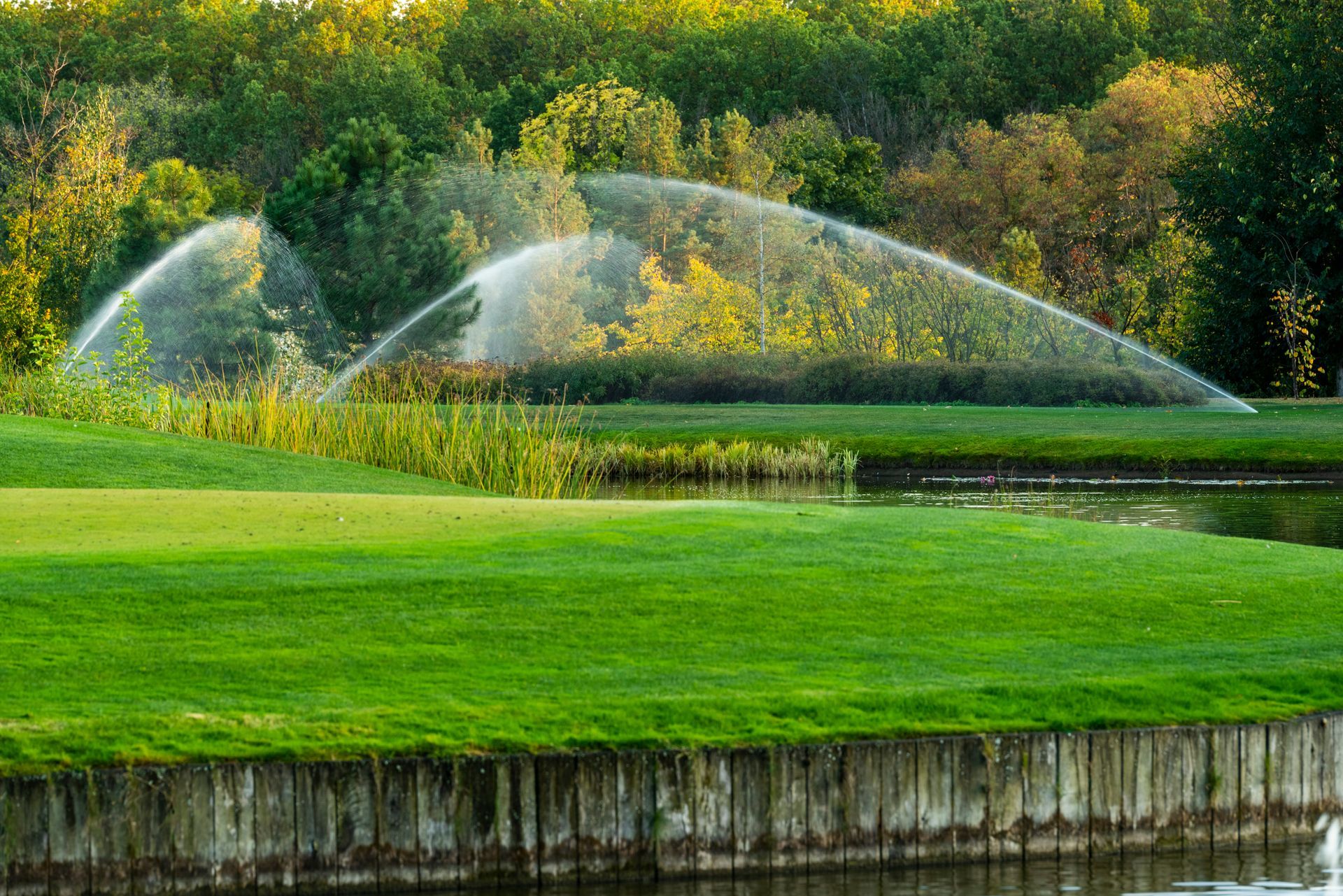
| Irrigation Review | Checks heads, coverage, and runtime against actual plant needed |
| Soil Support | Amends pH, adds organic matter, fixes nutrient gaps |
| Disease Monitoring | Catches fungus and blight before it takes over a whole zone |
| Repair of Worn Areas | Plus, sod, or seed where foot traffic has killed the crown |
| Seasonal Clean-Up | Removes thatch, leaves, and debris that smother growth |
If a contract only lists mowing and trimming, it leaves out the work that often determines whether turf actually stays healthy.
How Turf Quality Shapes Property Appearance
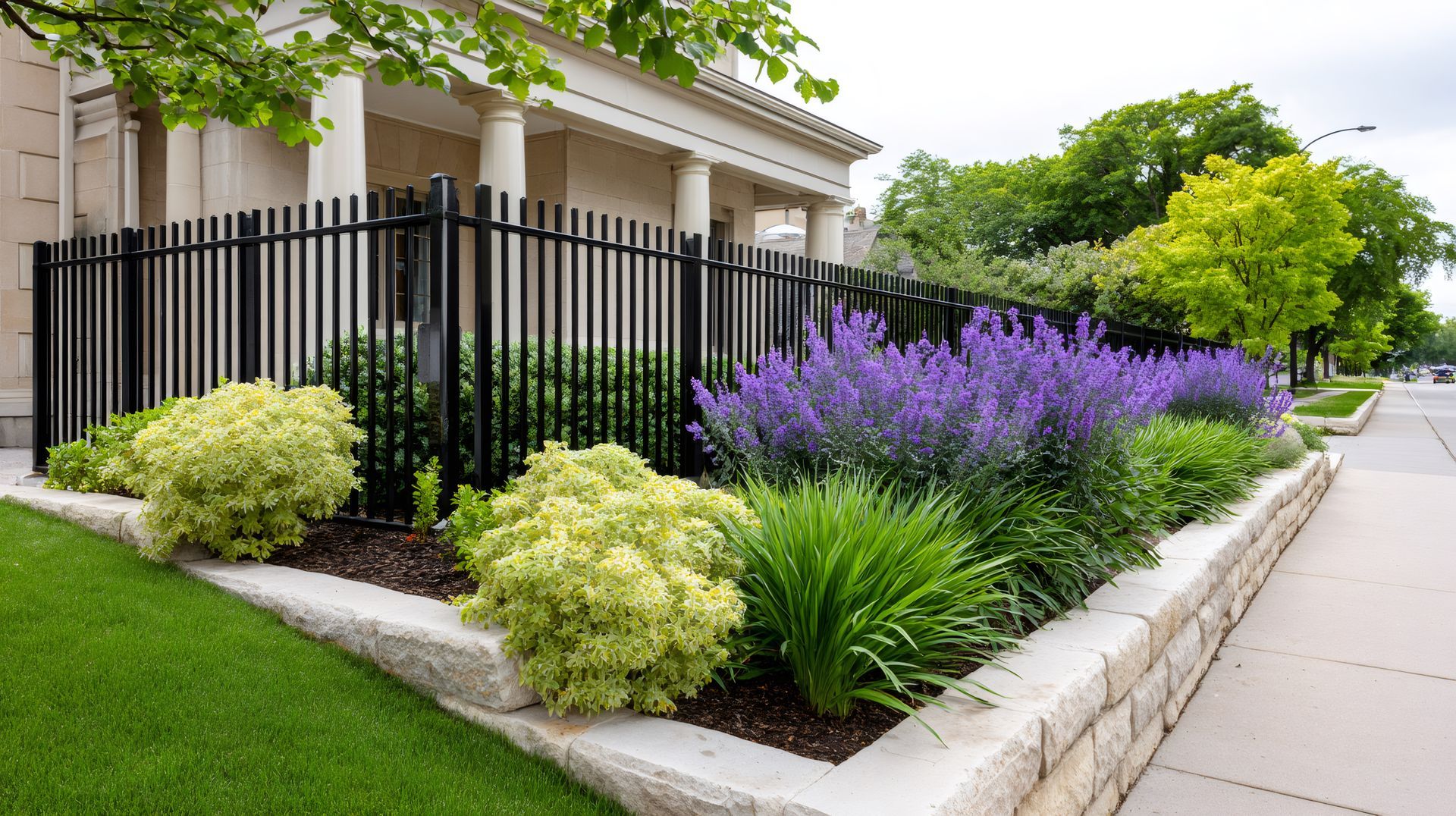
Turf is one of the largest visual surfaces on most commercial properties. Before visitors notice signage, plantings, or building details, they often notice the condition of the lawn.
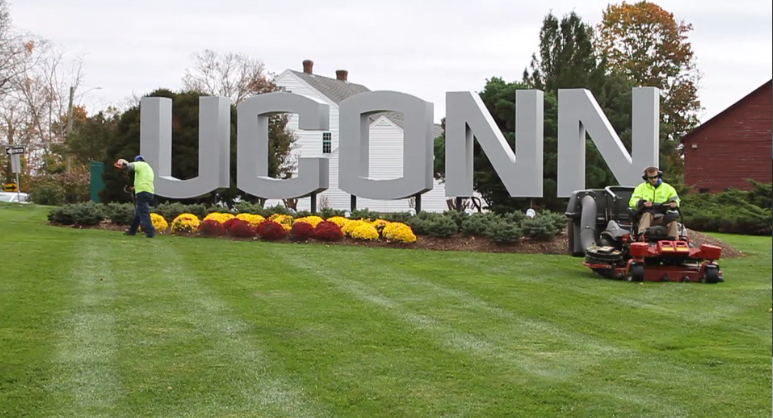
Prospective families touring a school read campus pride straight off the front lawn. When stripes run even and color stays deep green through July, people notice without naming why. When patches turn brown and weeds crowd the walks, they notice that faster.
Thin grass, weeds, discoloration, and worn edges make a property look neglected, even when the rest of the landscape is maintained.
How Commercial Turf Services Support Grass Health
Healthy turf depends on what is happening below the surface. Long-term turf performance is tied to root depth, soil condition, nutrient balance, water movement, and recovery from stress.
Strong Turf programs monitor:
- Color consistency across sun and shade
- Density in high-traffic areas
- Weed pressure through the season
- Compaction and drainage issues
- Recovery after mowing, rainfall, heat, and use
Soil, Roots, and Nutrients
Grass health starts in the soil. Roots need oxygen, room to grow, and the right nutrient balance. Soil testing and targeted treatment usually produce better results than generic seasonal applications.
Compaction and Aeration
Heavy use from people, equipment, and events compacts soil and limits water and air movement. Aeration opens the soil, improves root access, and helps turf recover more effectively.
Seasonal Stress Prevention
Summer heat, drought, fungal pressure, and winter damage rarely appear without warning. A strong turf plan works ahead of the problem with the right timing for feeding, irrigation review, disease monitoring, and fall recovery work.
How Turf Services Improve Safety and Usability
Commercial turf is not just decorative. People walk on it, gather on it, cross it, and use it every day. When turf condition breaks down, safety and site function often decline with it.
Common failure posts we see most often on commercial sites:
- Trip hazards from bare patches near walkways
- Slip risk on muddy slopes after rain
- Rutted ground from equipment or event traffic
- Blocked sight lines where grass grows into walks
- Worn crowns at entries and gathering spots
What Makes a Turf Plan Right for Your Property
The right service plan depends on how the property is used.
Office Parks and Commercial Buildings
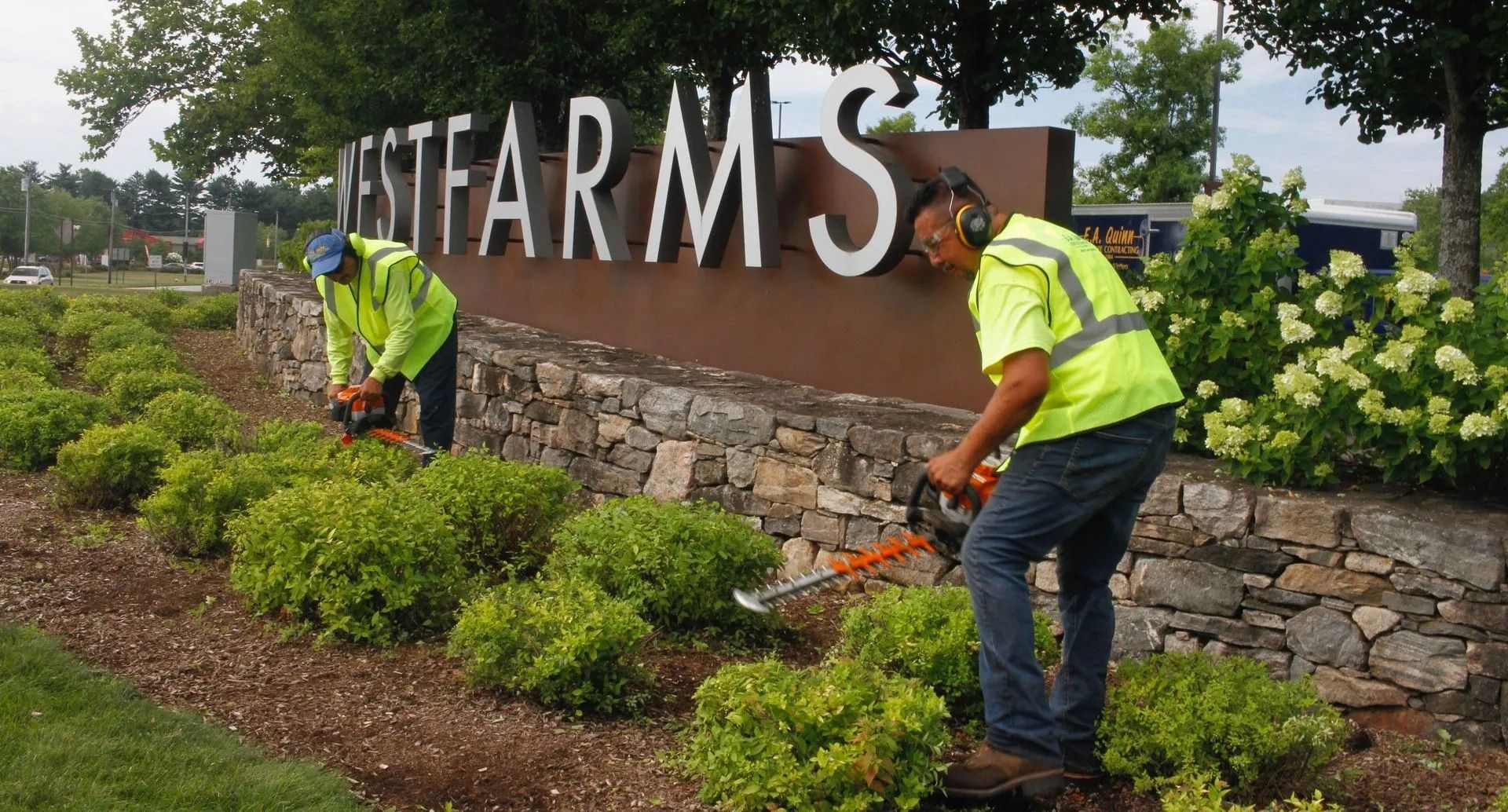
These properties usually need strong curb appeal, neat edges, reliable mowing schedules, and repair work that does not disrupt tenants or business operations.
Schools and Universities
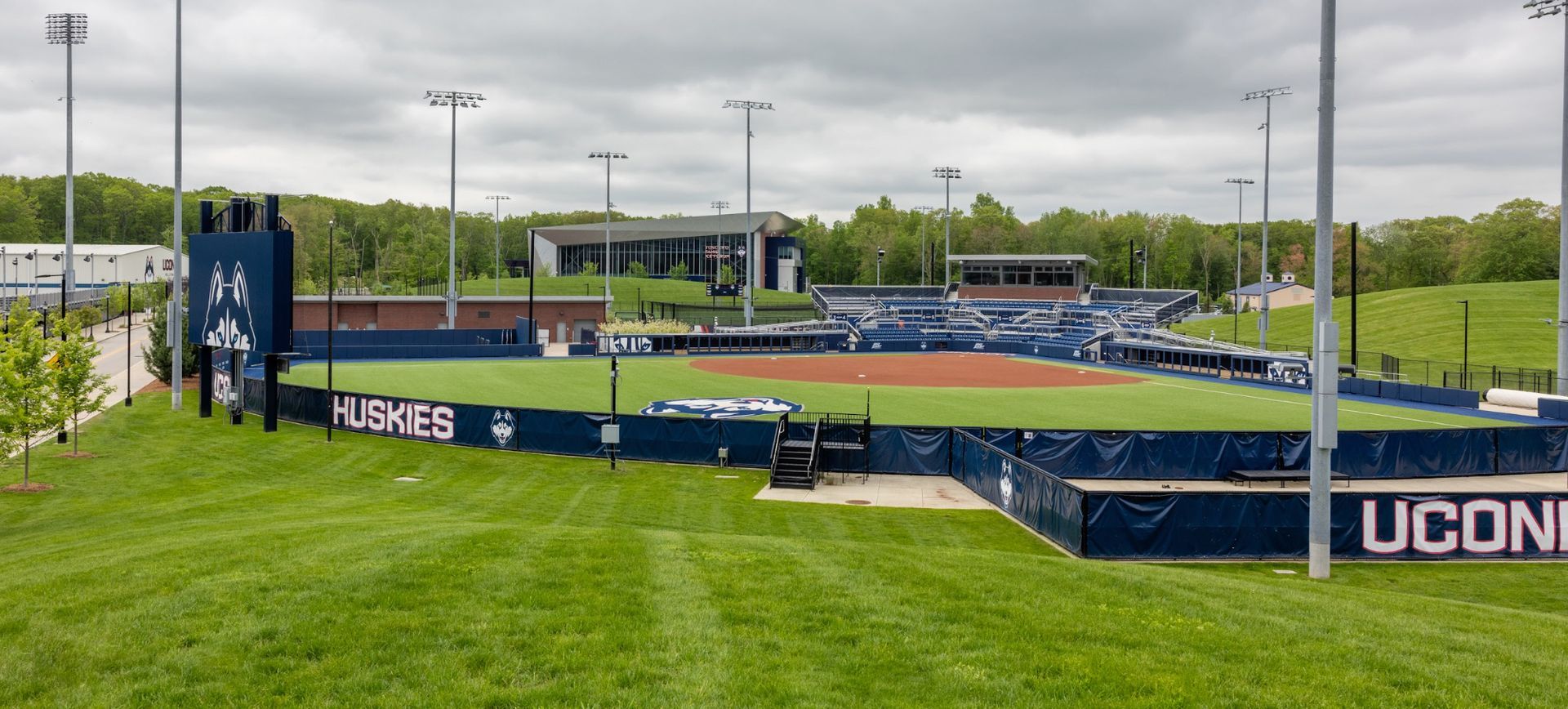
Campuses often deal with heavy foot traffic, event schedules, sports activity, and public visibility. Turf plans need to account for timing, durability, and safe access.
Facility and Operations Teams
Some in-house teams manage day-to-day appearance but need outside help for aeration, weed control, irrigation audits, or turf restoration.
HOA, Municipal, and Multi-Site Properties
These sites often need stronger communication, photo reporting, and board-ready updates alongside field work.
How Commercial Turf Services Should Be Scheduled Through the Year
Good turf programs are planned by season, not handled week to week without a larger strategy.
| Season | Main Work | Why It Matters |
|---|---|---|
| Spring | Start-up, clean-up, pre-emergent, repairs | Sets the baseline for the year |
| Summer | Mowing, feeding, disease check, irrigation tuning | Protects color and density through stress |
| Fall | Aeration, overseeing, core feeding | Rebuilds roots and fills thin zones |
| Winter | Planning, soil testing, equipment prep | Locks in next year's program before spring rush |
Seasonal planning is often what separates proactive service from reactive maintenance.
How to Evaluate a Commercial Turf Service Provider
Owners ask me what separates a strong provider from a cheap one. My answer rarely surprises anyone, but most buyers skip half the checks.
At EAQ Landscaping & Services, these five checks are how we expect to be judged. Here's the short list:
- Did they walk the site before quoting?
- Does the plan list specific services and timing?
- Is the same crew assigned regularly?
- Do they provide reporting, photos or site notes?
- Can they produce three references from similar properties?
A provider should be able to explain how they will address wear, weeds, compaction, drainage, and recovery, not just how often they will mow.
What a Strong Turf Program Should Solve
Use this as a grouped evaluation list. If your provider's plan addresses each issue below with a named approach, the program is real.
| Problem | What the Plan Should Do | Why It Matters |
|---|---|---|
| Thin turf and weak color | Soil test, targeted fertilization, fall overseeding | Sets the baseline for the year |
| Weeds and inconsistent growth | Pre-emergent spring, spot treatment summer, broadleaf control fall | Protects color and density through stress |
| Compaction and poor recovery | Core aeration, topdressing, traffic rerouting where needed | Rebuilds roots and fills thin zones |
| Drainage-related lawn failure | Swale repair, French drains, soil amendment, regrade wet zones | Locks in next year's program before spring rush |
How Turf Services Connect to Broader Landscaping Work
Turf performance is tied to the rest of the landscape. Irrigation, drainage, tree canopy, bed maintenance, and seasonal cleanup all affect lawn condition.
Examples include:
- Irrigation settings affecting both turf and adjacent planting areas
- Drainage fixes solving wet turf and runoff issues at the same time
- Tree shade influencing turf variety, moisture, and root competition
- Leaf buildup reducing turf health during seasonal change
For many properties, turf results improve when one team manages the site as a whole instead of treating each service in isolation.
Why Property Owners Hire Professional Commercial Turf Services
Property owners and facility teams hire professional turf contractors for a few clear reasons:
- more consistent appearance
- healthier, more durable grass
- fewer site complaints
- less strain on internal staff
- better planning and budget control
- more reliable results over time
A strong turf program protects both the look and function of the property.
FAQ
What is Included in Commercial Turf Services?
Commercial turf services may include mowing, fertilization, weed control, aeration, overseeding, irrigation review, soil treatment, turf repair, disease monitoring, and seasonal cleanup.
How are Turf Services Different from Mowing?
Mowing is only one task. Turf services also address soil health, weed pressure, compaction, drainage, and seasonal recovery.
How Often Should Commercial Turf Be Serviced?
Most properties need weekly service during the growing season, with additional seasonal treatments scheduled at key times through the year.
When Should Aeration and Overseeding Be Done?
Cool-season grasses: early fall is best. Warm-season varieties: late spring through early summer. Timing matters more than frequency, so skipping the right window costs more than adding an extra round.
How Do You Manage Turf on School and Campus Properties?
Schedule around school hours, use approved products, coordinate with athletics staff, and plan around event calendars. Safety and communication matter as much as the agronomy.
Why Does Aeration Matter for Commercial Turf?
Aeration helps reduce compaction, improve root growth, and increase water and air movement through the soil.
When Should A Property Go Beyond A Mowing-Only Contract?
A property usually needs more than mowing when it shows thinning turf, repeated weeds, worn areas, drainage problems, or site safety concerns.
What Should I Ask Before Hiring A Commercial Turf Company?
A property usually needs more than mowing when it shows thinning turf, repeated weeds, worn areas, drainage problems, or site safety concerns.
Conclusion
Grass is the biggest visual element on most commercial properties, and it's also unfortunately the most neglected. A real turf program treats the lawn as a living system that affects appearance, safety, usability, and cost. Mowing alone cannot carry that weight.
Our recommendation: stop buying mowing and start buying a plan. Ask for the full year mapped out, tied to soil, season, and site use. Owners who shift to that model stop reacting and start running ahead of problems.
Ready for a real turf program? Book a site walk with EAQ landscaping ASAP, and get a full year of work mapped out before you need it.