Commercial Hardscape Restoration for Safer, Cleaner, Better-Looking Properties
Commercial properties serve as the first point of contact between a brand and its customer. Whether you manage a sprawling corporate campus, a bustling retail plaza, or a high-end medical office, the state of your exterior surfaces speaks volumes before a visitor even reaches the front door.
While much attention is often paid to lawns and landscaping, the hardscape – the pathways, plazas, and entryways that facilitate human movement – is arguably the most critical component of property performance and at minimum should be inspected yearly and cleaned every 5 years, or as needed.
What Is Commercial Hardscape Restoration?
Commercial hardscape restoration is a specialized service dedicated to repairing, cleaning, resetting, and renewing exterior built surfaces. Unlike routine maintenance – which might involve simple sweeping or minor weeding – or full replacement, which requires significant capital expenditure and site disruption, restoration occupies the middle ground. It involves the methodical treatment of non-living exterior elements, including pavers, stone walls, concrete walkways, curbing, and plazas.
The purpose of restoration is to return existing materials to a safe, stable, and visually appealing condition. By addressing structural integrity and surface aesthetics, property managers can extend the lifecycle of their site’s infrastructure. It is an investment in stability; rather than waiting for a failure to force a costly renovation, restoration maintains the functional utility of your property’s bones.
Restores Commercial Walkways, Entrances, and Plazas
High-visibility zones like main building entrances and retail plazas are the "front porch" of your business. When these areas show signs of wear – such as loose bricks or stained concrete – it subconsciously signals to visitors that the property is under-maintained.
Hardscape restoration focuses on revitalizing these high-traffic arteries to ensure they remain functional and welcoming. By refreshing pedestrian paths and courtyards, you demonstrate a commitment to excellence, ensuring that the first impression a client or tenant receives is one of professional care and attention to detail.
Repairs Settled Pavers, Loose Stone, and Uneven Surfaces
Commercial surfaces are subject to constant stress from heavy foot traffic, drainage issues, and fluctuating weather patterns. Over time, these factors lead to subgrade movement, causing pavers to shift or sink. Left unaddressed, these subtle movements grow into significant structural issues.
Common problems include:
- Settled pavers: Areas that dip and hold water, creating eyesores and potential icing hazards.
- Loose stone: Unstable elements that become safety risks during transit.
- Uneven joints: Surfaces that become "wavy," causing disorientation and trip hazards.
- Freeze-thaw heaving: A common culprit in many climates, pushing hardscape materials out of alignment.
- Edge failure: When perimeter restraints fail, the entire hardscape can lose its structural rigidity, leading to cascading damage.
Restoration involves lifting these materials, correcting the underlying base, and resetting them into a stable, level configuration.
Improves Safety Around High-Traffic Property Areas
Damaged hardscape surfaces in high-traffic commercial areas can increase safety risks for pedestrians and visitors. Restoration helps reduce hazards by correcting surface and transition issues.
Common issues include:
- Trip hazards
- Cracked or uneven walking surfaces
- Poor transitions between pavement and hardscape
- Step and landing issues
- Accessibility concerns where applicable
- Reduced visibility of damaged areas at night
Cleans Stained, Weathered, and Discolored Hardscape Surfaces
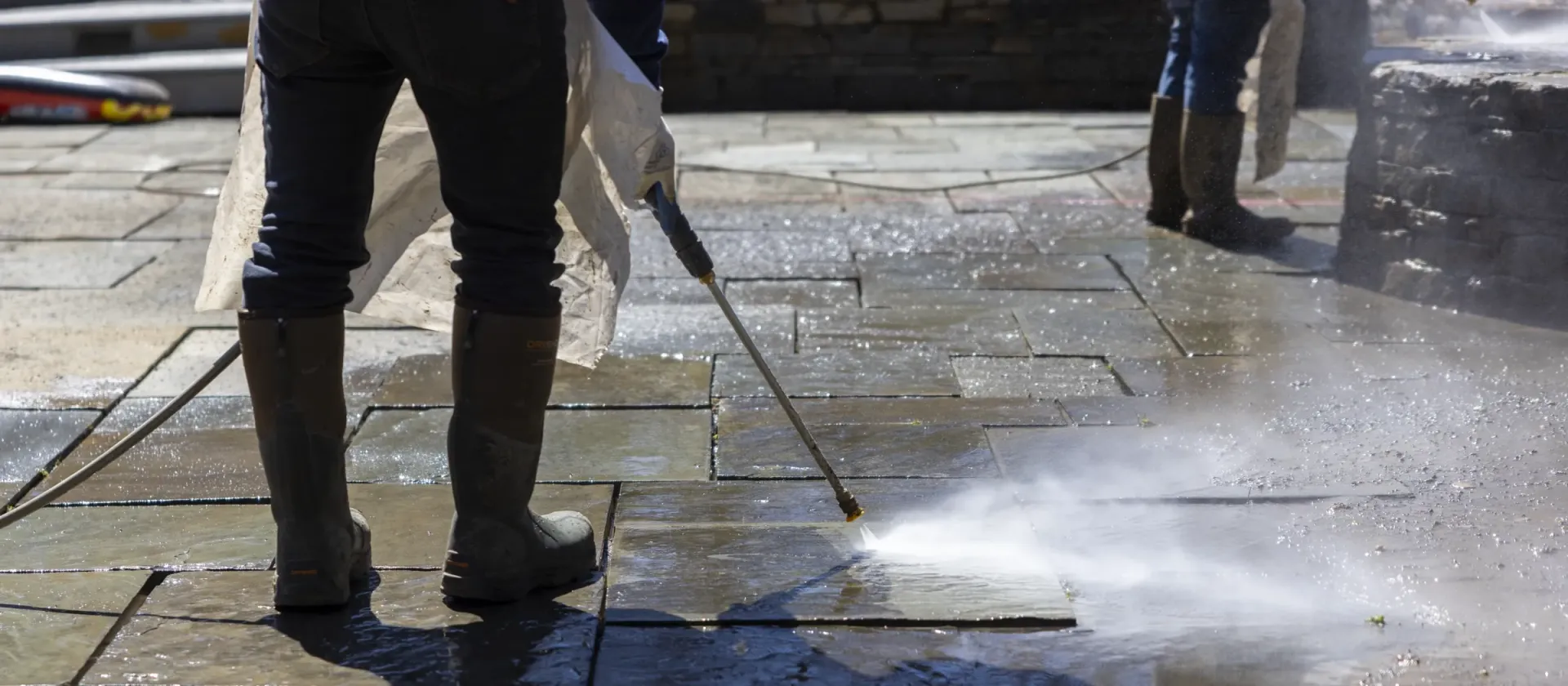
Hardscape surfaces in commercial properties naturally accumulate dirt and stains over time due to exposure and regular use. These conditions can affect the overall appearance of entrances, walkways, and other exterior areas.
Common issues include:
- Dirt buildup
- Moss and algae
- Salt residue
- Rust stains
- Leaf staining
- Oil or grease marks
- Surface discoloration
Professional cleaning helps remove surface contaminants and improve overall appearance. However, results vary depending on material type and condition, and cleaning may not fully restore the original color of the surface.
This process supports a cleaner, more maintained look that can influence how tenants and visitors perceive the property’s condition.
Restores Retaining Walls, Seat Walls, Steps, and Edging
Vertical hardscape elements, such as retaining walls and seat walls, are not just aesthetic; they are structural components that manage grade changes and define spaces. When these features lean, separate, or crumble, it suggests a failure in the soil management behind them.
Restoration involves re-pinning or resetting caps, stabilizing walls, and repairing mortar or joints. For steps, the focus is on maintaining consistent riser heights to prevent tripping. If a wall is failing due to poor drainage, a restoration expert will identify the source of the water pressure and resolve it, preventing the wall from leaning further.
Protects Drainage, Grading, and Site Performance
The condition of hardscape surfaces directly affects how water moves through a commercial property. When surfaces begin to shift, settle, or deteriorate, they can disrupt the intended grading and alter how runoff is distributed across the site. This often leads to drainage issues that extend beyond the paved areas themselves.
- Water pooling in low-lying or uneven areas
- Altered or blocked runoff paths across the site
- Erosion forming near hardscape edges and transitions
- Drainage disruption beneath paver systems
- Washout developing around walkways and traffic zones
- Base failure caused by prolonged poor water movement
These factors play a direct role in how the property performs as a business asset. A clean and visually consistent exterior helps establish trust and professionalism, while also supporting tenant retention by improving day-to-day environmental quality.
How Commercial Hardscape Restoration Is Evaluated
Professional evaluation involves a systematic site audit. Experts look for structural movement, signs of base failure, and drainage patterns. They also document existing trip hazards, surface wear, and the integrity of joints and edges. This audit acts as a diagnostic report, allowing you to prioritize repairs based on risk and budget. By using photo documentation and site-mapping, you gain an audit trail that is invaluable for insurance and future capital planning.
| Evaluation Area | What the Team Checks |
|---|---|
| Surface condition | Cracks, stains, movement, loose materials |
| Base stability | Settlement, heaving, sinking, washout |
| Drainage | Pooling water, runoff paths, erosion |
| Safety | Trip hazards, step issues, uneven transitions |
| Appearance | Staining, discoloration, moss, damaged edges |
| Repair scope | Restore, reset, clean, rebuild, or replace |
What Is Included in a Commercial Hardscape Restoration Service?
- Site inspection
- Surface cleaning
- Paver resetting
- Stone repair
- Joint repair
- Edge restraint repair
- Step and wall repair
- Drainage correction
- Sealing, where suitable
- Final cleanup
When Should a Commercial Property Restore Hardscapes?
You should consider restoration as soon as you observe visible signs of decline. These include loose stones that wobble underfoot, water pooling in areas that should be dry, or cracks in walls that seem to be widening. If you see moss, algae, or deep-set stains that do not respond to regular pressure washing, it is time for professional treatment.
Additionally, if you are receiving feedback from tenants or visitors regarding the property’s appearance or safety, restoration is an essential service to preserve your professional reputation.
Commercial Hardscape Restoration vs. Hardscape Replacement
| Restoration Is Better When | Replacement Is Better When |
|---|---|
| Most materials are still usable | Materials are broken beyond repair |
| Damage is limited to surface or base correction | If pavers are still in good condition we can lift the entire patio, rebase and lay down original pavers |
| The goal is to improve appearance and safety | The layout, grade, or use must change |
| Budget favors repair and renewal | Long-term function requires rebuilding |
| Appearance | Staining, discoloration, moss, damaged edges |
| Repair scope | Restore, reset, clean, rebuild, or replace |
Choosing a Commercial Landscaping Team for Hardscape Restoration
When selecting a partner, look for a team with deep commercial experience. EAQ Landscaping understands the nuance of property management, such as the need for minimal disruption to business hours and strict adherence to safety protocols.
A partner that can manage both your landscaping and your hardscape creates a unified, seamless approach to property maintenance, ensuring that your irrigation, grading, and paving all work in harmony.
How Hardscape Restoration Fits Into a Commercial Landscape Maintenance Plan
Hardscape restoration is most effective when it is treated as part of an ongoing commercial landscape maintenance strategy rather than a standalone service. Integrating it into seasonal and routine maintenance cycles helps prevent structural issues, improve site performance, and maintain consistent property conditions throughout the year.
- Seasonal inspections to identify early signs of shifting, cracking, or drainage issues
- Spring cleanup to address winter damage and reset surface conditions after freeze-thaw cycles
- Fall preparation to reinforce hardscape stability before colder weather and increased runoff
- Snow and ice damage review to assess impacts from de-icing agents, plowing, and freeze-related movement
- Turf edge repair near hardscapes to maintain clean transitions between grass areas and paved surfaces
- Plant bed and walkway coordination to ensure landscape elements and hardscape systems function together cohesively
- Drainage monitoring to detect and correct water flow issues before they lead to erosion or base failure
When these activities are coordinated across the full maintenance schedule,
hardscape restoration becomes part of a continuous system of care rather than a reactive repair process. This approach ensures that both hardscape and softscape elements remain aligned in function and appearance.
Frequently Asked Questions About Commercial Hardscape Restoration
What is commercial hardscape restoration?
Restoration brings failing exterior surfaces back to working condition without tearing them out. Crews relevel sunken pavers, rebuild compacted base layers, replace cracked units, refresh polymeric joints, and clean concrete, stone, brick, or block. The work covers structural pieces too: retaining walls bulging from hydrostatic pressure, steps with worn nosings, plaza decks with failed expansion joints.
What hardscape areas can be restored?
Most built outdoor surfaces qualify if the sub-base holds. Common targets include paver plazas, walkways, granite curbing, brick entries, bluestone patios, segmental retaining walls, poured stairs, and natural stone borders. Decorative work such as pillars, planters, fountains, and seat walls can also be reset or repointed rather than rebuilt.
Is hardscape restoration cheaper than replacement?
For paver and segmental wall systems in sound condition, restoration typically runs 30 to 60 percent less than tear-out. Concrete repair math shifts faster: once cracks pass slab thickness or rebar shows rust staining, patching costs climb past full replacement within a few seasons. A field assessment of the base, drainage, and material wear tells you which side of that line your site sits on.
Can hardscape restoration improve property safety?
Repair handles surface-level failure: shifted pavers, open joints, efflorescence, isolated cracks under quarter-inch, worn sealant, and minor settlement. Replacement enters the picture when the base has washed out under multiple zones, when more than 25 percent of units are broken, when retaining walls show batter loss, or when ADA slope tolerances cannot be reached through resetting. Soil borings and a level survey settle borderline cases.
Can hardscape restoration improve property safety?
Trip hazards over a quarter-inch are the leading slip-and-fall claim source on commercial properties, and most stem from heaved pavers, sunken concrete panels, or root upheaval at tree wells. Resetting these, grinding lipped slabs, repairing handrail anchors, and restoring detectable warning strips at curb ramps closes the gap between current site condition and ASTM F1637 walking-surface standards.
How often should commercial hardscapes be inspected?
Annual walkthroughs catch routine wear, but high-traffic sites need a second pass after the spring thaw to flag freeze-heave damage before summer events. Add targeted inspections after any 2-inch rainfall, after snow removal seasons with heavy plow contact, and any time tenants report ponding, movement, or new cracks. Retaining walls above four feet warrant a separate engineering review every three to five years.
Choosing the Right Commercial Restoration Company Matters
Restoration is a "financial" decision and a cost-effective alternative to replacement. Hardscape restoration is more than maintenance - it extends the useful life of existing hardscape features and increases your property value.
EAQ Landscape Contracting eliminates guesswork by leading with a technical process: we bring in experts, develop an approved scope, manage required approvals, and align restoration plans with the site’s timing and constraints, ensuring your project proceeds without interruption.